What is Vision Therapy?
As defined in a Joint Organizational Policy Statement of the American Academy of Optometry and the American Optometric Association , vision therapy is a sequence of activities individually prescribed and monitored by the doctor to develop efficient visual skills and processing.
Vision therapy is prescribed after a comprehensive eye examination has been performed and has indicated that vision therapy is an appropriate treatment option. The vision therapy program is based on the results of standardized tests, the needs of the patient, and the patient’s signs and symptoms. The use of lenses, prisms, filters, occluders, specialized instruments, and computer programs is an integral part of vision therapy.
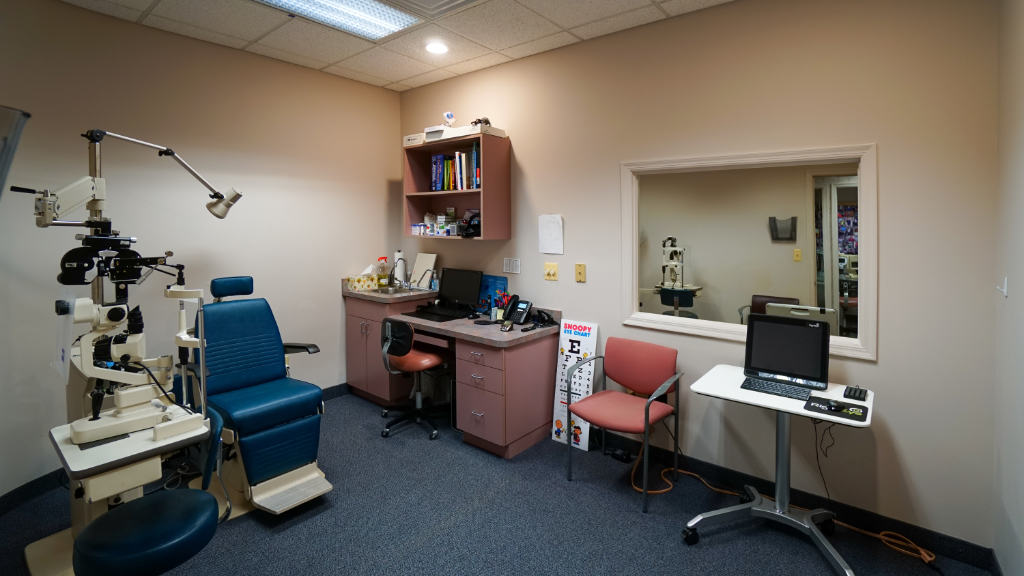
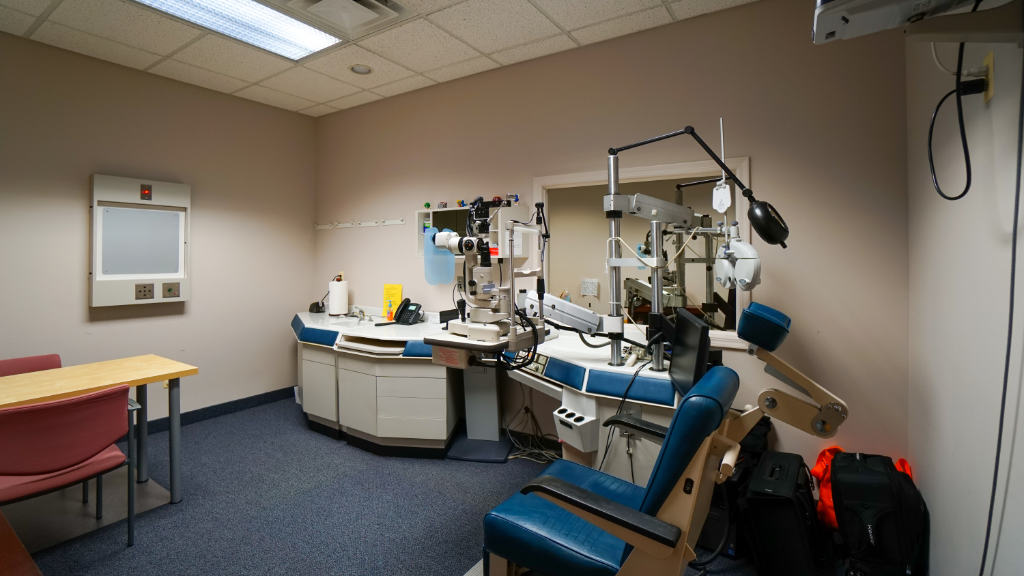
Vision Therapy is Administered in the Office Under the Guidance of a Doctor
Vision Therapy requires a number of office visits and depending on the severity of the diagnosed conditions, the length of the program typically ranges between six months to a year. Activities paralleling in-office techniques are typically taught to the patient to be practiced at home to reinforce the developing visual skills.
The Joint Policy Statement can be viewed in its entirety on the American Optometric Association’s Website.
Vision Therapy = Physical Therapy for your Eyes!
In some respects, vision therapy is like physical therapy for the eyes. Rather than treating the muscles of the body, it works on the eyes and visual system through eye-brain connections. It is an invaluable tool that changes not only the vision of our patients, but improves many related areas of their lives as well. It can literally be life changing!
The College of Optometrists in Vision Development (COVD) notes that vision therapy is generally conducted in-office, in once or twice weekly sessions of 30 minutes to an hour, occasionally supplemented with procedures done at home between office visits. You can view more information about vision therapy on the COVD website.
The Science Behind Vision Therapy
Vision occurs as collaboration between the eyes and the brain, informed by feedback from the rest of the body. The science of vision therapy is therefore rooted in the ability to guide an individual to make changes through feedback and awareness. As in any effective therapy, there must be a differential diagnostic process identifying which aspects of the visual system are mal-developed or in need of rehabilitation. Intervention can then be designed in accordance with generalized principles of therapy.
Vision Therapy Should Be Individualized and Customized
The science of therapy has established that to be maximally effective, therapy should be individualized and customized to the needs of the patient. Vision therapy may be implemented by a trained therapist, but must be administered under the supervision and guidance of a knowledgeable Doctor of Optometry. The patient must internalize changes and understand that the visual system is modified therapeutically, not by procedures done to the patient, rather to the extent the patient is responsible for viewing differently.
Technology has greatly aided the science of optometric vision therapy but placing the patient in front a computer cannot substitute for active observation and interaction with a therapist. In the next section we review research on vision therapy, but there is one major study that is crucial in understanding the science of vision therapy.
The CITT, or Convergence Insufficiency Treatment Trial, is a multicenter study funded by the National Institutes of Health (the original study name was CIRS, or Convergence Insufficiency and Reading Study). The group that created this study went on to publish the CISS, or Convergence Insufficiency Symptom Survey, to prove that pencil push-up therapy or base-in prism glasses used in isolation were NOT effective, and that home-alone therapy was equivalent to placebo therapy. This is where the science becomes pivotal. Anyone currently treating convergence insufficiency without the benefit of supplemental in-office procedures is essentially dispensing placebo therapy until proven otherwise.
Office-based vision therapy is far superior to any other form of intervention
Research on Vision Therapy
There are now many excellent compilations on the subject. Let’s start with a review, published in the highly regarded Cochrane Database Reviews on the National Center for Biotechnology Information’s Website. The citation is Scheiman M, Gwiazda J, Li T. Non-surgical interventions for convergence insufficiency. Cochrane Database Syst Rev 2011 Mar 16;(3):CD006768.
Convergence insufficiency, or CI, is a condition for which research has proven that office-based vision therapy is far superior to any other form of intervention. Two important points to keep in mind about this gold standard study, the citation for which is as follows: Scheiman M, Cotter S, Mitchell GL, Kulp M, et al (CITT Study Group). Randomized clinical trial of treatments for symptomatic convergence insufficiency in children. Arch Ophthalmol 2008;126:1336-49.
Convergence insufficiency, or CI, is a condition for which research has proven that office-based vision therapy is far superior to any other form of intervention. Two important points to keep in mind about this gold standard study, the citation for which is as follows:
Scheiman M, Cotter S, Mitchell GL, Kulp M, et al (CITT Study Group). Randomized clinical trial of treatments for symptomatic convergence insufficiency in children. Arch Ophthalmol 2008;126:1336-49.
- A successful or improved outcome was found in 73% of the office-based therapy group, 43% of the pencil push-up group, and 35% of the office-based placebo therapy group, and 33% of the home-based computerized therapy group.
- The results of this study are now being used by some insurance carriers to support the need for office-based vision therapy, but only of 12 weeks duration, as was used in the CITT study.
This demonstrates several very significant points about research on optometric vision therapy:
- Unlike drug studies, in which the patient takes a placebo pill, it is challenging to design a placebo therapy group. Placebo therapy must be designed well enough that neither the patient nor the therapist knows that the therapy is not directly addressing the condition. The CITT group did a brilliant job designing this group, which is why they were able to generate such a good rate of improvement that came about from improving sustained visual attention – in fact, a couple of percentage points greater than the home-based computerized therapy group!
- Although the outcome after 12 weeks of therapy was impressive at a 73% rate of improvement, we do not settle for that in our practice. Why would you want only a 73% rate of improvement if by going beyond 12 weeks, and/or adding additional procedures, you can generate a 95% rate of improvement?
- Even if we take what the CITT has proven at face value, since ophthalmologists and pediatricians profess to practice only evidence-based medicine, that means that in the years since the CITT was published the field should have been transformed and have integrated the research outcomes of the CITT. Unfortunately for many patients in need, almost no pediatric ophthalmologists prescribe office-based vision therapy.