Books We Recommend
The following are a sample of reading references and resources that provide additional information about vision beyond 20/20 eyesight, and how it influences development, learning, performance, and rehabilitation.
-
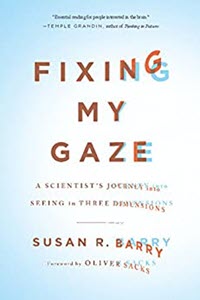
Fixing My Gaze: A Scientist’s Journey Into Seeing in Three Dimensions
Beautifully written by neuroscientist Dr. Susan R. Barry, this is a first-hand account of the profound influence of vision on development.
It details the inconsideration of ophthalmologists (eye surgeons) toward optometric vision therapy, and the emergence of a new dimension in the depth and stability of her vision after Dr. Barry underwent vision therapy.
-
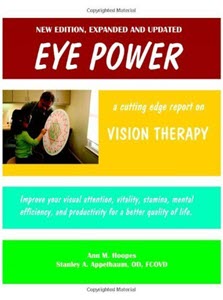
Eye Power: An Updated Report on Vision Therapy
This is an easy to read book co-authored by Dr. Stanley Appelbaum and Ann Towsend Hoopes this is very informative for the public.
-
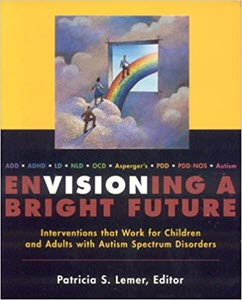
Envisioning a Bright Future: Interventions that Work for Children and Adults with Autism Spectrum Disorders
A multi-authored paperback, this wonderful book summarizes current approaches from a variety of disciplines including Optometry.
-
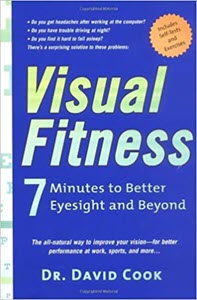
Visual Fitness: 7 Minutes to Better Eyesight and Beyond
Written by behavioral optometrist Dr. David Cook, this paperback provides insight about how brain based therapy can help adults absorb more information visually and achieve a whole new outlook on life.
-
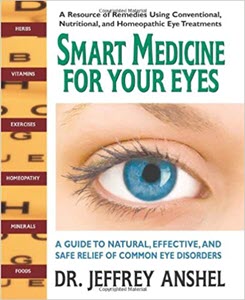
Smart Medicine for Your Eyes: A Guide to Safe and Effective Relief of Common Eye Disorders
This book is written by an optometrist who has pioneered in understanding the influence of nutrition on the eyes and visual system.
-
Endless Journey
After a serious car accident in which she suffered traumatic brain injury and was partially blinded, veterinarian Janet Stumbo was told that there was no chance for improvement.
In this fascinating first-hand account Dr. Stumbo shares who behavioral vision care allowed her to prosper after medical doctors gave her little hope for a normal life. It serves as an inspiring message to survivors, families and health care practitioners who work with TBI patients, and is available here.
-
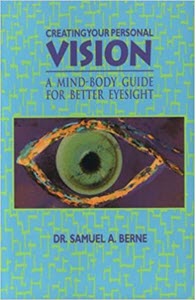
Creating Your Personal Vision: A Mind-Body Guide for Better Eyesight
Written by behavioral optometrist Dr. David Cook, this paperback provides insight about how brain based therapy can help adults absorb more information visually and achieve a whole new outlook on life.
-
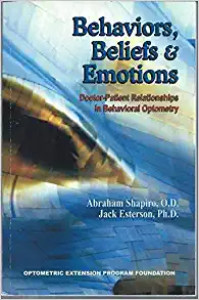
Behaviors, Beliefs and Emotions: Doctor-Patient Relationships in Behavioral Optometry
Co-authored by Abraham Shapiro, O.D. and Jack Esterson, Ph.D, this is a unique monograph showing how visual issues can be intertwined with how people respond to stressors in their lives. It is often those responses which trigger their visual symptoms and difficulties.
With an understanding of these issues, adults can be guided to personal insight and improved vision.
-
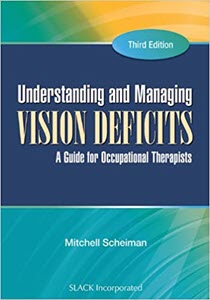
Understanding and Managing Vision Deficits: A Guide for Occupational Therapists
Authored by Dr. Mitchell Scheiman, this book aids the collaboration between occupational therapists and optometrists.
-
Diagnosis and Management of Special Populations
A good resource, edited by Dr. Dominick Maino, on caring for children with special needs.
-
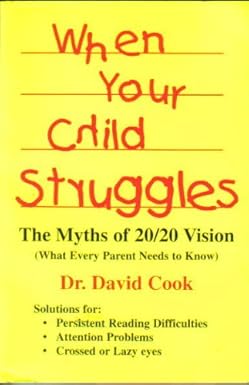
When Your Child Struggles: The Myths of 20/20 Vision: What Every Parent Needs to Know
Written by Dr. David Cook, this is a very helpful guide for parents.
-
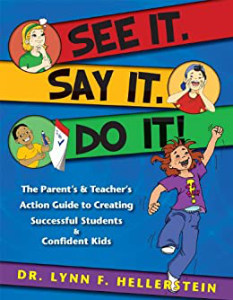
See It. Say It. Do It! The Parent’s & Teacher’s Action Guide to Creating Successful Students and Confident Kids
Written by Dr. Lynn Hellerstein, this a unique book about visualization, a key developmental visual skill.
-
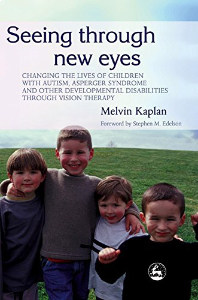
Seeing Through New Eyes: Changing the Lives of Children with Autism, Asperger Syndrome and other Developmental Disabilities through Vision Therapy
Written by Dr. Melvin Kaplan, this book provide the rationale for the use of yoked prism glasses and other intervention.
-
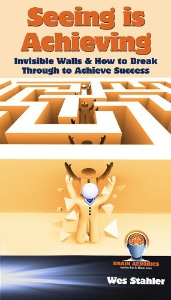
Seeing is Achieving
This book describes how many of the problems children encounter in school, sports and social activities can be corrected by developing proper channels for their eyes to communicate information to the brain.
-
Vision and School Success
A short paperback that helps educators recognize the visual demands of the classroom, the behavior of students who are experiencing stress because of their vision problems and ways and means of alleviating this stress.
-
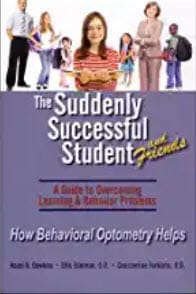
The Suddenly Successful Student & Friends
This concise paperback gives a clear overview of behavioral optometry, including supportive comments from pediatricians, general practitioners, and best selling author Allan Cott, M.D., a New York psychiatrist.
-
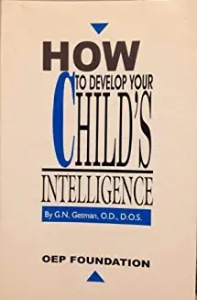
How to Develop Your Child’s Intelligence
A classic paperback by Dr. Gerald Getman, this book is ideal for parents who home-school.
-
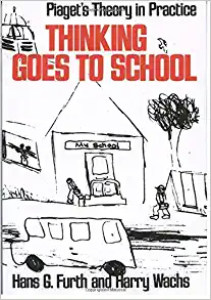
Thinking Goes to School
Another paperback that parents who home school will find well-suited to adopting as part of their curriculum. It is co-authored by two Piagetian scholars, the developmental optometrist Dr. Harry Wachs, and Hans Furth.
Included are activities in General Movement Thinking, Discriminative Movement Thinking, Visual Thinking, Auditory Thinking, Hand Thinking, Graphic Thinking, and Logical Thinking.
-
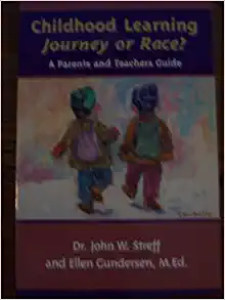
Childhood Learning: Journey or Race?
Written by the pioneering optometrist Dr. John Streff, this paperback demonstrates to parents that working at the level of how a child sees and understands the world is a key element in changing childhood learning from a race that is exhausting and fruitless to a valuable, successful journey for all.
-
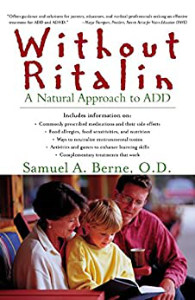
Without Ritalin: A Natural Approach to ADD
Explores a unique route from vision anomalies in children to a diagnosis of ADHD and on to the subsequent overuse of Ritalin for all manner of learning and behavioral problems. Contains information on the latest ADHD research, the relationship between vision disorders and ADHD, and analysis of commonly prescribed behavior modification drugs.
-
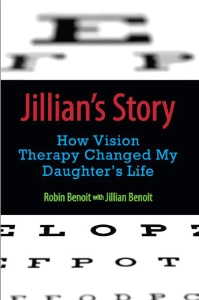
Jillian’s Story: How Vision Therapy Changed My Daughter’s Life
This is an inspiring book written by Robin Benoit with contributions from her daughter, Jillian. It describes how a family overcame the poor guidance given to them by ophthalmologists (eye surgeons not trained in developmental optometry) about their daughter’s amblyopia (“lazy eye”).
The Role of Optometry in Early Identification of Autism Spectrum Disorders
Autism spectrum disorder (ASD) is a diverse, behaviorally identifiable neurodevelopmental disorder that occurs in 1 in 68 children. The absence of eye contact, unresponsiveness to facial gestures, and/or difficulty in sharing joint visual attention are signs of abnormal or atypical visual development. Optometric utilization of various targets used for diagnostic testing in infants and toddlers may be among the earliest probes of preferred visual looking patterns conducted with this population. This potentially places Optometry in the vanguard of identifying infants and young children at risk for developing ASD characteristics.
Visual Factors in Childhood Behavioral Disorders
Children of the 21st century develop in an increasingly complex society due, in part, to the tremendous influx of information competing for their attention. this necessitates filters and barriers so that they are not overwhelmed by stimuli, yet openness and receptivity to the types of exposures associated with normal childhood development.
On the surface, behavioral disorders have little to do with eyes and even less to do with optometry. however, the fact that vision occurs in the brain and not in the eyes, and that vision co-mingles extensively with social and emotional pathways in the brain, compels us to look more closely at the role of optometry in disorders such as attention deficit (a-d/hd), oppositional defiance (odd), bi-polar disorder, and depression.
Vision disorders can be misdiagnosed as ADHD
Vision disorders can be misdiagnosed as ADHD because there are signs and symptoms that overlap. A paper by Damari, Liu, and Smith addressed the importance of a thorough evaluation of the visual system before a child is placed on medication as the only alternative given.